
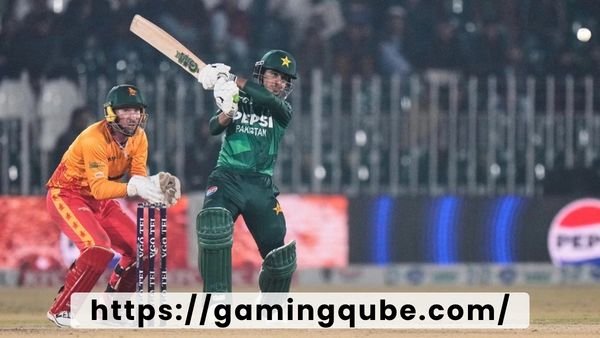

As soon as Zimbabwe earned Test status in 1992, they immediately joined the upper echelons of international cricket and Pakistan-Zimbabwe rivalry emerged – complete with legendary World Cup clashes and bilateral series matches.
These matches represented more than mere competition; they also served as an important benchmark for emerging teams like Zimbabwe and inspired their development.
Head-to-Head Record
Zimbabwe and Pakistan’s cricket history is one of grit, skill, and sporting spirit. Their matches represent more than mere wins and losses; rather they highlight two nations with diverse histories, cultures, and cricketing philosophies – as well as provide learning opportunities, foster development of cricket within each team, foster mutual respect between two countries that may come from very different places in time and space.
At first, Zimbabwe and Pakistan first engaged meaningfully during the 1983 Cricket World Cup before Zimbabwe had attained Test status. Though one-sided, this game served as an invaluable benchmark of Zimbabwe’s fledgling cricketing capabilities and has served as an important steppingstone since. Since then, their contests have become more evenly balanced, emphasizing each team’s individual strengths; although Pakistan’s formidable bowling attack and batting depth often overpowered Zimbabwe’s limited-overs game; nonetheless Zimbabwe was able to develop through mentoring exchanges and collaborative efforts designed at elevating their level of play.
Zimbabwe and Pakistan’s rivalry has long been defined by their annual contests in Twenty20 Internationals, and their introduction opened up an exciting new chapter with this fast-paced format allowing both teams to experiment with innovative strategies while showcasing emerging talent. Results have been unpredictable and intense in these encounters, yet provide Zimbabwean players with invaluable exposure to high-intensity cricket that will aid their development as they work to strengthen domestic cricket structures in Zimbabwe. Though they differ considerably, both sides share common challenges and aspirationsal goals; such as investing in youth academies to develop young talent for cricketing’s next generation. It is hoped that continued engagement between them will produce more balanced and competitive contests in future.
ODI
Zimbabwe and Pakistan have played 66 One Day International (ODI) matches between them since 1982, splitting their series 26-26 while three matches went unfinished. Over these 66 ODIs, 49 bowlers recorded 49 hat-tricks; this achievement can only occur if three wickets fall successively without runs being scored between their dismissals; Jalal-ud-Din achieved his first Zimbabwean hat-trick against Australia in 1982 by dismissing Brad Haddin, Michael Clarke and Ian Bell with consecutive deliveries; only one wicket was possible per delivery with run outs not counting towards his total haul.
Zimbabwe vs Pakistan – Last ODI Complete Scorecard
3rd ODI, Queens Sports Club, Bulawayo – 28 Nov 2024
Result: Pakistan won by 99 runs
Pakistan Innings – 303/6 (50 Overs)
| Batsman | R | B | 4s | 6s | SR |
|---|---|---|---|---|---|
| Saim Ayub | 31 | 37 | 3 | 1 | 83.78 |
| Abdullah Shafique | 50 | 68 | 5 | 1 | 73.53 |
| Kamran Ghulam | 103 | 99 | 10 | 4 | 104.04 |
| Mohammad Rizwan (c/wk) | 37 | 47 | 4 | 1 | 78.72 |
| Agha Salman | 30 | 26 | 3 | 1 | 115.38 |
| Tayyab Tahir* | 29 | 16 | 4 | 0 | 181.25 |
| Mohammad Irfan Khan | 3 | 5 | 0 | 0 | 60.00 |
| Aamir Jamal* | 5 | 4 | 1 | 0 | 125.00 |
Extras: 15
Total: 303/6 (50 Overs)
Zimbabwe Bowling
| Bowler | O | M | R | W | ECO |
|---|---|---|---|---|---|
| Richard Ngarava | 10 | 0 | 53 | 2 | 5.30 |
| Sikandar Raza | 10 | 0 | 56 | 2 | 5.60 |
| Blessing Muzarabani | 10 | 0 | 62 | 1 | 6.20 |
| Faraz Akram | 10 | 0 | 61 | 1 | 6.10 |
Zimbabwe Innings – 204 All Out (40.1 Overs)
| Batsman | R | B | 4s | 6s | SR |
|---|---|---|---|---|---|
| Joylord Gumbie | 5 | 9 | 1 | 0 | 55.56 |
| Dion Myers | 4 | 4 | 1 | 0 | 100.00 |
| Tadiwanashe Marumani | 24 | 30 | 4 | 0 | 80.00 |
| Craig Ervine (c) | 51 | 63 | 5 | 1 | 80.95 |
| Sean Williams | 24 | 29 | 3 | 1 | 82.76 |
| Brian Bennett | 37 | 27 | 4 | 2 | 137.04 |
| Clive Madande | 20 | 32 | 1 | 0 | 62.50 |
Extras: 39
Total: 204 (40.1 Overs)
Pakistan Bowling
| Bowler | O | M | R | W | ECO |
|---|---|---|---|---|---|
| Haris Rauf | 7.1 | 0 | 34 | 2 | 4.74 |
| Abrar Ahmed | 8 | 0 | 41 | 2 | 5.12 |
| Saim Ayub | 4 | 0 | 12 | 2 | 3.00 |
| Aamir Jamal | 7 | 0 | 43 | 1 | 6.14 |
| Faisal Akram | 6 | 0 | 37 | 1 | 6.16 |
Player of the Match: Kamran Ghulam – 103 (99)
T-20
Zimbabwe national cricket team (ZNCT) is an international Twenty20 International (T20I) cricket team which represents Zimbabwe at T20 International matches. As one of nine editions of T20 World Cup since its creation, Zimbabwe have never reached the knockout stage and remain members of ICC.
In 2022, Zimbabwe lost to India by 31 runs in their semi-final. Johnson Charles scored an unbeaten 36-ball half century while Sikandar Raza took three for. Wesly Madhevere and Luke Jongwe did their best but fell short by 31 runs.
Zimbabwe have played 12 T20I matches against Pakistan and have emerged victorious on four of them; however, they have never defeated them at a T20 World Cup competition despite several tries to do so. This article provides an overview of records set by Zimbabwe cricket team in T20 International matches; specifically those related to them on List of ICC T20 International Records.
Zimbabwe vs Pakistan – Last T20 Match Complete Scorecard
3rd T20I, Queens Sports Club, Bulawayo – 5 Dec 2024
Result: Zimbabwe won by 2 wickets (Pakistan won series 2–1)
Pakistan Innings – 132/7 (20 Overs)
| Batsman | R | B | 4s | 6s | SR |
|---|---|---|---|---|---|
| Sahibzada Farhan | 4 | 7 | 1 | 0 | 57.14 |
| Omair Yousuf | 0 | 2 | 0 | 0 | 0.00 |
| Usman Khan | 5 | 8 | 1 | 0 | 62.50 |
| Agha Salman (C) | 32 | 32 | 3 | 0 | 100.00 |
| Tayyab Tahir | 21 | 14 | 2 | 1 | 150.00 |
| Qasim Akram | 20 | 15 | 3 | 0 | 133.33 |
| Arafat Minhas* | 22 | 26 | 2 | 0 | 84.62 |
| Abbas Afridi | 15 | 14 | 3 | 0 | 107.14 |
| Jahandad Khan* | 6 | 3 | 0 | 1 | 200.00 |
Extras: 7
Total: 132/7 (20 Overs)
Zimbabwe Bowling
| Bowler | O | R | W | ECO |
|---|---|---|---|---|
| Blessing Muzarabani | 4 | 22 | 2 | 5.50 |
| Richard Ngarava | 4 | 28 | 1 | 7.00 |
| Wellington Masakadza | 4 | 20 | 1 | 5.00 |
| Ryan Burl | 4 | 26 | 1 | 6.50 |
| Tinotenda Maposa | 4 | 34 | 1 | 8.50 |
Zimbabwe Innings – 133/8 (19.5 Overs)
| Batsman | R | B | 4s | 6s | SR |
|---|---|---|---|---|---|
| Brian Bennett | 43 | 35 | 4 | 2 | 122.86 |
| Tadiwanashe Marumani | 18 | 16 | 2 | 1 | 112.50 |
| Sikandar Raza | 19 | 17 | 2 | 0 | 111.76 |
| Ryan Burl | 10 | 9 | 1 | 0 | 111.11 |
| Tinotenda Maposa* | 12 | 4 | 1 | 1 | 300.00 |
Extras: 16
Total: 133/8 (19.5 Overs)
Pakistan Bowling
| Bowler | O | R | W | ECO |
|---|---|---|---|---|
| Abbas Afridi | 4 | 24 | 3 | 6.00 |
| Jahandad Khan | 2.5 | 30 | 2 | 10.59 |
| Haris Rauf | 4 | 26 | 1 | 6.50 |
| Sufiyan Muqeem | 4 | 20 | 1 | 5.00 |
Player of the Match: Brian Bennett
Best Batting Performers
Zimbabwe may have struggled against Pakistan historically, yet their recent performances have improved substantially – with their batting intensity increasing and their batsmen showing more determination to hit. Pakistan remains dominant at home ground; however T20 cricket adds another dynamic to this contest.
Zimbabwe and Bangladesh’s rivalry has proven highly entertaining over the years. While Zimbabwe’s batting performances have fluctuated at times, some players have shown world-class ability. Zimbabwe boasts several gifted batsmen such as captain Hamilton Masakadza who scored an unprecedented double century on debut against Bangladesh, Grant Flower and Heath Streak as all-rounders, wicket-keeper/batsman Andy Blignaut, as well as opener Murray Goodwin.
Zimbabwean players have also shown themselves to be adept in One-Day Internationals (ODIs), with numerous victories against test-playing nations and reaching multi-national tournament finals. Zimbabwe’s fielders have earned worldwide respect due to their fielding ability.
But the team can often be diminished by a shortage of quality fast bowlers. Due to financial issues at ZC board, some players have chosen Kolpak deals abroad; one such player was Vusi Sibanda who went for Gloucestershire in 2007. More players may follow his lead.
Last major highlight for Zimbabwe came during the 2001-02 season when, against South Africa, they managed a remarkable upset. Following an initial disaster of an innings start, Zimbabwe managed to recover and reach 234 for six at lunch. Neil Johnson scored 76 and Lance Klusener made half-centuries; unfortunately this resulted in their defeat by Zimbabwean batsmen; Charles Coventry set an incredible 194 runs record until it was eclipsed by Sachin Tendulkar in 2010.
Best Bowling Performers
Spinner Abrar Ahmed made an instant impactful debut ODI performance for Pakistan at The Oval against Zimbabwe on November 1. His flighted and varied deliveries kept the Zimbabwe batsmen guessing while his consistent strikes kept Pakistan within striking range of their target score. Abrar’s contribution anchored Pakistan’s chase so easily they reached it effortlessly!
Only five bowling performances since Wisden published its initial list have achieved entry into this elite circle in 16 years since Wisden released their original list, including Stuart Broad’s 8 for 15 against Australia at Trent Bridge in 2015 which just missed out on first place by one run. Richard Hadlee’s exceptional 9 for 52 against an Australian side away from home in 1985-86 made another impressionful contribution; additionally Bob Willis made history defending against England at Headingley in 1934 while Fazal Mahmood provided an inspiring tour de force performance against England at The Oval in 1954.
South Africa and Sri Lanka both feature twice in this list with two performances each, such as Muttiah Murali’s all-time best innings of 10 for 74 against Pakistan at Bridgetown in 1984, and Anil Kumble’s extraordinary 208-ball thrashing of Zimbabwe at Oval in 1996 – an outstanding achievement which required skill, courage and luck to achieve! Furthermore, its low PQI value indicated it was extremely difficult for batsmen.